Santorini caldera
Back to all places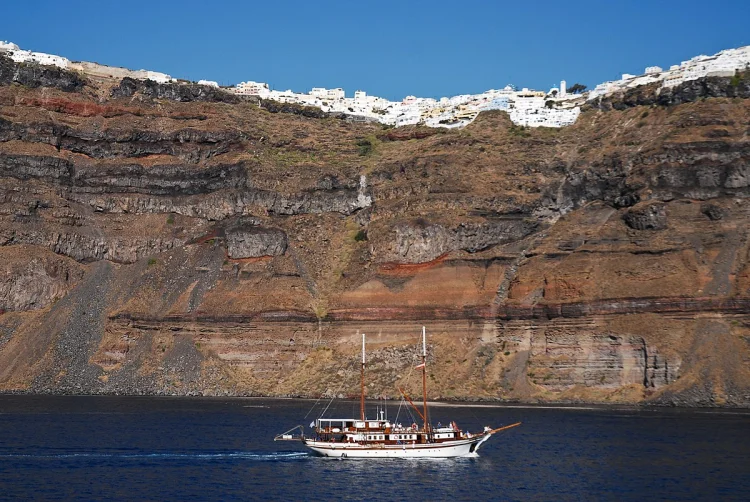
Nestled in the heart of the Aegean Sea, the awe-inspiring Santorini caldera is a geological wonder formed by one of the most powerful volcanic eruptions in human history, around 1600 BCE. This cataclysmic event, known as the Minoan eruption, forever altered the landscape and is believed to have contributed to the decline of the advanced Minoan civilization. As visitors gaze out over the caldera’s azure waters, they are not merely looking at a natural formation but a monumental witness to history’s volatile dance with nature.
Santorini, originally a single landmass, saw its central part collapse into the sea, creating a stunning lagoon surrounded by steep cliffs that soar up to 300 meters above sea level. Throughout centuries, myth and legend have swirled around this caldera.
The famed philosopher Plato may have drawn inspiration from this dramatic setting when he wrote about the fabled lost city of Atlantis. Explorers and historians alike have been captivated by the caldera’s enigmatic beauty and its historical significance. Beyond its ancient origins, the caldera has seen pivotal moments in history, including invasions by the Venetians and Ottomans.
In 1950, the volcano erupted once again, reminding inhabitants and visitors of its latent power.
In contemporary times, the caldera continues to attract millions of tourists, enamored by its stunning sunsets, luxurious cliffside villages, and unique volcanic beaches. It’s not just a destination, but a testament to the profound and ongoing interplay between human civilization and the raw forces of the Earth.
Photo: Mstyslav Chernov
36.39556, 25.45917