Prehistoric Town of Akrotiri
Back to all places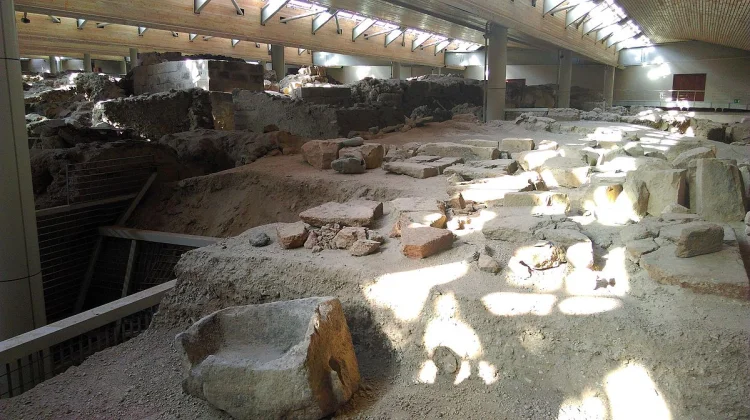
Situated on the volcanic island of Santorini, Akrotiri is a mesmerizing window into the ancient Aegean world. This prehistoric settlement, often referred to as the "Minoan Pompeii," thrived during the Bronze Age around 1600 BCE.
Buried under volcanic ash from a catastrophic eruption around 1500 BCE, Akrotiri’s remarkably preserved ruins offer a tantalizing glimpse into sophisticated urban life nearly 3,600 years ago.
Archaeological excavations that began in 1967 unearthed multi-storied buildings, advanced drainage systems, and intricate frescoes that showcase the artistic prowess of its inhabitants. The town’s elaborate architecture and vibrant wall paintings speak volumes about a civilization with trade connections stretching as far as Egypt and Syria. Among the most fascinating findings are the remnants of impressive frescoes depicting daily life, nature, and mythical themes, providing crucial insights into the culture and beliefs of the time.
Intriguing stories and legends swirl around Akrotiri. Some scholars believe it inspired Plato’s tale of Atlantis, given its sudden destruction and advanced society. Further, the site’s sophisticated infrastructure, including a complex sewer system, suggests a highly organized and technologically advanced society that was strikingly ahead of its time.
Despite its abrupt demise, the Prehistoric Town of Akrotiri remains a poignant testament to human ingenuity and resilience. As you walk its ancient streets, you can’t help but feel a deep connection to the lives of those who once thrived in this vibrant, enigmatic settlement. Visitors today can explore an array of meticulously reconstructed houses, shops, and public spaces, making Akrotiri not just a historical destination, but a vivid journey back in time.
Photo: Tatjana Matlina
36.35061, 25.40197