Ancient Thera
Back to all places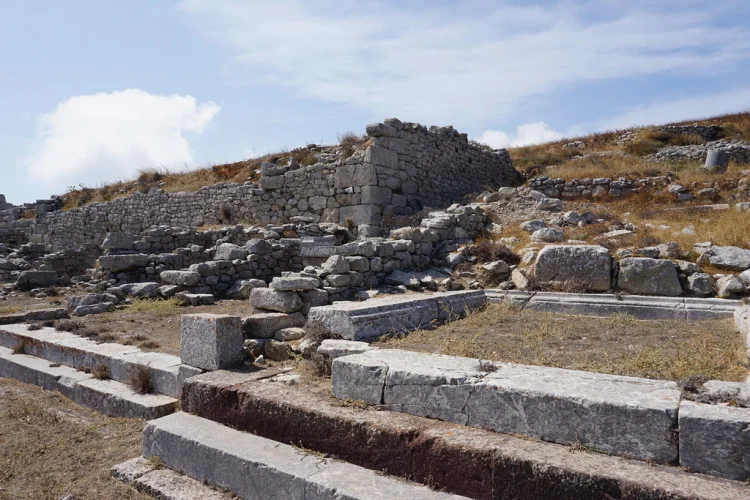
Perched high on the cliffs of the picturesque island of Santorini, Ancient Thera offers a fascinating glimpse into millennia of history. This archaeological gem dates back to the 9th century BC and was named after the mythical king Theras, who is said to have founded the settlement.
Its strategic location allowed it to thrive as an important trading hub for centuries. Visitors walking through the ruins of Ancient Thera can marvel at the remnants of its diverse architectural influences, from Hellenistic to Roman eras, reflecting the complex historical tapestry of the island.
Among the ruins are well-preserved streets, dwellings, and public buildings, including the Agora, temples, and a theater that could seat over a thousand spectators, attesting to the settlement’s once bustling social and economic life.
The city met its demise following the volcanic eruption around 726 AD, which buried much of the settlement under a blanket of ash and pumice. This cataclysmic event is forever etched in the island’s collective memory, contributing to the many myths and legends that envelop its ancient stones. One particularly intriguing legend suggests that Ancient Thera was linked to the lost city of Atlantis, with the catastrophic eruption resembling Plato’s description of Atlantis’ sudden disappearance into the sea. Moreover, the shifting alliances and power struggles between successive civilizations, from the Dorians to the Byzantines, offer history enthusiasts a rich narrative of conquests and declines.
Exploring Ancient Thera is like taking a step back into a bygone era, where every ruin whispers a tale of the island’s storied past. Whether it’s the intriguing artifacts uncovered during various excavations or the breath-taking views of the Aegean Sea from its high vantage point, this ancient site is a must-visit for anyone wanting to delve deep into the annals of history.
Photo: Matt Kieffer
36.36358, 25.47785